There is a specific kind of frustration that only digital artists understand. You open Procreate, you have time to paint, you are in the mood — and then nothing. The canvas just sits there. You drag a few colors around, nothing clicks, and twenty minutes later, you have closed the app without making a single mark.
Nine times out of ten, that is a color problem, not a motivation problem.
When the palette feels wrong, everything else feels wrong too. But when you land on the right combination — the one that actually matches what you were trying to say — the work almost makes itself. That is the real power of building a thoughtful color practice, and it is exactly why tools like a pastel color palette generator exist. Not to replace your instincts, but to get you past the blank-canvas paralysis faster.
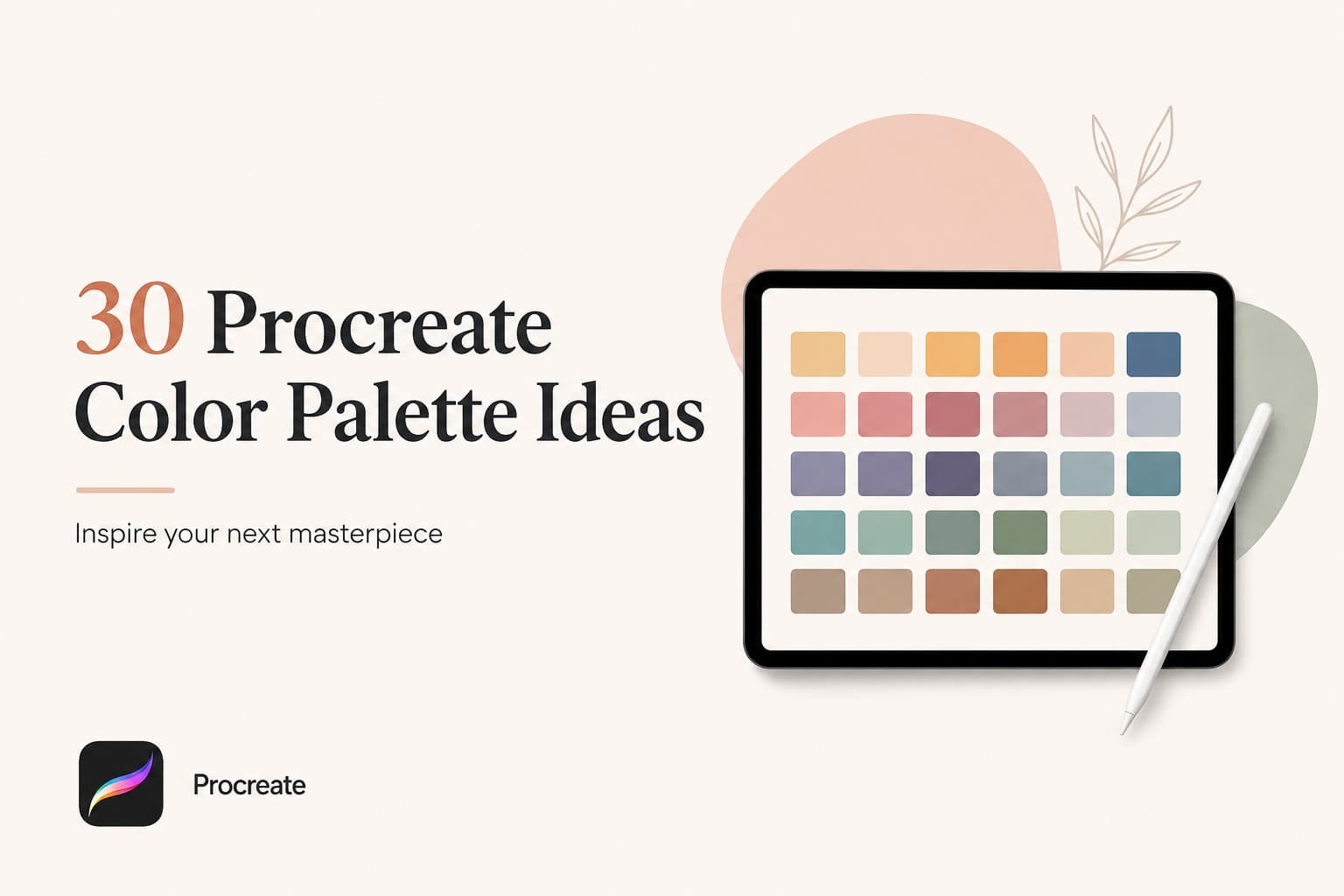
This guide covers 30 Procreate color palette ideas that genuinely work — for different moods, styles, and skill levels. It also covers how to build your own palettes from scratch using Coloraccy and how to avoid the color mistakes that quietly hold many artists back.
What Is a Pastel Color Palette Generator, Really?
A pastel color palette generator is a tool that builds sets of soft, muted colors for you — pulling from color theory principles to make sure the shades actually work together, rather than just looking nice side by side in a swatch row.
The keyword there is "together." Anyone can pick five colors they like. The harder thing is picking five colors that hold a composition together, that create the right contrast without clashing, and that still feel cohesive when you are fifty layers deep into a painting. That is what a good generator handles behind the scenes.
Coloraccy's pastel color palette generator does this using real harmonic relationships — complementary pairings, analogous sequences, triadic arrangements — so the output is not random prettiness. It is something you can actually paint with. And because you get hex codes you can drop directly into Procreate, there is no manual transcription, no guessing at RGB values.
Why Your Palette Choice Shapes the Entire Painting
Most artists know that color matters intellectually. But it is easy to underestimate just how much it matters before anything else even happens.
The Institute for Color Research found that people form a subconscious impression of what they are looking at within 90 seconds, and somewhere between 62% and 90% of that first reaction is driven by color alone. That is, before they have read a caption, before they have understood the subject matter, before they have appreciated your brushwork.
Your palette is doing most of the communication before you get credit for anything else.
For practical purposes, this means a cohesive color palette is not just an aesthetic choice — it is a strategic one. A thoughtfully built palette signals that the work is intentional. It builds emotional atmosphere. It makes a loose sketch feel considered, and a detailed painting feel unified.
There is also a less-discussed benefit: working within a defined set of colors removes a category of decision-making during your session. Instead of pausing every ten minutes to wonder whether to reach for a warmer or cooler version of a shadow tone, you already have it. That mental bandwidth goes back into the actual painting.
The 30 Procreate Color Palette Ideas
1. Soft Blush and Ivory
Warm pinks and creamy off-whites are genuinely timeless. There is a reason this combination shows up in fine art portraits, fashion illustration, and botanical work across centuries — it is flattering, it is gentle, and it photographs beautifully. Coloraccy's aesthetic palette collection has plenty of starting points if you want to explore variations.
2. Desert Sand and Terracotta
Earthy oranges, warm beiges, sun-bleached rose. This palette feels like late afternoon in a dry climate — long shadows, warm stone, a little dust in the air. It is particularly good for travel illustration and textured still-life work where you want warmth without going full-on autumn.
3. Ocean at Dawn
Deep navy bleeding into soft periwinkle, then pale aquamarine, then shell pink at the edges. The interesting thing about this palette is how many moods it can hold — peaceful, melancholic, hopeful, all at once. Dawn light over water has that quality.
4. Forest Canopy
Moss green, fern green, bark brown, dappled gold. This is a palette that rewards patience because the values are close together and you have to work harder to create contrast — but when it lands, it feels genuinely immersive. Use Coloraccy's color picker to pull exact tones from foliage reference photos.
5. Lavender and Sage
There is something about soft purple and muted green together that reads as botanical and slightly nostalgic without being saccharine. Wedding illustration, stationery, lifestyle branding — this combination works across all of them.
6. Midnight Noir
Deep charcoal, near-black, electric indigo, one sharp accent. This is a palette for drama. High contrast, graphic weight, and a single bright note that your eye goes to immediately. Great for noir storytelling and character design with strong silhouette work.
7. Citrus Pop
Lemon, tangerine, lime, and coral. High-energy and genuinely fun to work with. This palette will not suit everyone, but for children's illustration and food art, it brings a kind of unapologetic cheerfulness that softer palettes cannot.
8. Nordic Winter
Icy blue, pale grey, almost-white, a barely-there blush. Stripped back and meditative. There is a visual stillness in this palette that is hard to achieve with more colors. Think long shadows on snow, frost on glass, the quiet of a cold morning.
9. Vintage Academia
Sepia, aged parchment, forest green, burgundy. Worn leather, candlelight, a shelf of old books. If you are working on anything that needs to feel like it belongs in a library or a Victorian study, this is the palette. Coloraccy's academia palette collection goes deep on this aesthetic.
10. Tropical Punch
Hot coral, electric turquoise, banana yellow, deep fuchsia. This is maximalist and intentionally so. Unapologetically bold — the kind of palette that looks wrong in theory and completely right in practice when you commit to it fully.
11. Storm and Lightning
Slate grey, stormy violet, silver, one sharp electric yellow. The energy of this palette comes entirely from that single accent against neutrals. Everything is tense and loaded until the yellow arrives and releases it.
12. Sakura Season
Soft pinks, pale greens, white, the faintest warmth of gold. Cherry blossom season has a particular visual quality — delicate, fleeting, slightly dreamlike — and this palette captures it well for anyone working in Japanese-influenced illustration styles.
13. Abstract Ink
Black, raw white, primary red, cobalt blue. Reductive to the point of being almost confrontational. This is the palette for Procreate work that wants to feel gestural and immediate, like a canvas that was made quickly and without second-guessing. The abstract palette section on Coloraccy has good expansions in this direction.
14. Dusk Gradient
Burnt orange moving through coral and rose into deep purple. What makes this palette interesting is the transition — it is essentially a timeline of one sky over forty minutes. Works well for any illustration that wants to feel like a specific, transient moment.
15. Muted Earth Tones
Warm taupe, grey-green, dusty rose, off-white. Understated in the best possible way. This is the palette for work that is not trying to shout — lifestyle illustration, quiet portraits, work that rewards a slow look.
16. African Sunset
Rich ochre, warm copper, burnt sienna, deep burgundy. There is a weight and groundedness to this combination that purely digital palettes sometimes lack. Coloraccy's African palette collection draws from a broader range of culturally resonant color traditions worth exploring.
17. Pastel Rainbow
Every spectrum hue, desaturated and lifted to its softest possible version. This is one of those palettes that sounds like it should be overwhelming but is actually very easy to work with because the low saturation keeps everything from fighting. Useful for character design, illustrated maps, and typography work.
18. Deep Sea
Black-blue, bioluminescent teal, pale mint, violet. There is something genuinely uncanny about deep ocean color — the way light behaves down there, the strangeness of the life forms. This palette carries that quality into fantasy and sci-fi illustration.
19. Rust and Cream
Rust red, warm cream, tan, caramel. Artisanal and warm, like handmade ceramics or folk textiles. This palette has a tactile quality that suits illustration work, trying to evoke physical craft.
20. Acrylic Studio
High-chroma primaries and secondaries with visible warmth, like colors that have been mixed on a physical palette and not quite blended out. Coloraccy's acrylic palette collection is worth checking here if you want to mimic the feeling of physical paint in Procreate.
21. Cottagecore Green
Sage, moss, fern, dusty lavender. Rural, overgrown, sun-dappled. This aesthetic has been popular for a few years now, and it remains genuinely useful because the color combinations are grounded in how plants actually look together outdoors.
22. Neon Arcade
Electric pink, radioactive green, vibrant cyan, deep black. Retro-futuristic, loud, and nostalgic for anyone who grew up around arcade games or early computer graphics. The black is what makes this work — it grounds the neons so they read as intentional rather than accidental.
23. Warm Monochrome
One hue — warm brown, amber, terracotta — explored through a full range of tints and shades. Monochromes force compositional thinking because color variety is off the table. Coloraccy's shade and tint generator is ideal for building these out from a single starting point.
24. Cloud Nine
Soft white, pale sky blue, barely-there lavender. The visual equivalent of weightlessness. This palette excels in children's illustration and any work trying to evoke comfort, safety, or gentle imagination.
25. Autumn Harvest
Deep pumpkin orange, burgundy, golden yellow, warm brown. The definitive seasonal palette, and it is one of those combinations where the familiarity is actually an asset — viewers bring emotional associations to it before you have even made a mark.
26. Mermaid Cove
Seafoam green, coral, turquoise, pearl white. Playful and slightly iridescent in feel. Works well for fantasy character work and any illustration that wants to feel like it belongs in or near water.
27. Urban Concrete
Cool greys, industrial blue, black, and a single fluorescent yellow. Hard-edged and contemporary. This palette suits architectural illustration, urban reportage, and graphic work that wants to feel like it belongs in a city.
28. Cherry and Matcha
Deep cherry red, matcha green, cream, and black. This is a visually striking pairing that feels culturally layered without being derivative — the contrasts are strong, but the overall effect is refined rather than harsh.
29. Brand Neutral
Warm grey, soft ivory, blush, navy. A versatile, professional-leaning palette that works for branding illustration, UI mockups, and any commercial work that needs to look polished across different applications. Build a version tailored to a specific client using Coloraccy's brand color kit.
30. Watercolor Dreams
Translucent blues, soft pinks, pale yellows, lavender. These loosely related pastels mimic the natural behavior of wet watercolor — the bloom, the bleed, the gentle, unexpected mixing at edges. In Procreate, they work beautifully with wet-brush settings.
How to Build Your Own Palette Using Coloraccy
The best palette for your work is usually one you have built yourself — because it reflects the specific feeling you are after, not a general aesthetic. Here is a straightforward process.
Step 1: Name the Mood First
Before you open any tool, write down three adjectives for the piece you are planning. Not subject matter — mood. "Anxious, urban, fragmented" is different from "anxious, quiet, isolated," and the palettes for those two pieces should look completely different. This step takes thirty seconds and saves a lot of time later.
Step 2: Browse and Generate a Starting Point
The Coloraccy palette showcase is a good place to begin if you have a rough direction but want to see how other people have approached similar color territory. From there, use the random color generator to introduce unexpected tones — sometimes the color that pushes a palette from ordinary to memorable is one you never would have chosen deliberately.
Step 3: Pull from Real-World Reference
A photograph of something real — a market stall, a rainy street, a piece of aged furniture — will almost always produce a more interesting palette than pure imagination. Coloraccy's image color extractor pulls the dominant and accent hues from any image you upload, giving you a palette that is grounded in actual visual experience rather than digital guesswork.
Step 4: Check the Contrast
Pretty colors that all live at similar brightness values will produce flat compositions. Before you commit to anything, run your palette through Coloraccy's complementary color finder to make sure you have enough contrast to create genuine focal points. This is one of those steps that feels like extra work until the first time it saves a painting.
Step 5: Export for Procreate
Procreate works with hex codes. Use Coloraccy's color format converter to convert your final swatches into the right format, then import them into Procreate's palette panel. From that point, your palette is available in every session until you decide to change it.
Matching Your Palette Strategy to Your Illustration Style
Not every palette approach works for every kind of work. Here is how to think about it by style.
Realistic Digital Painting
Realistic work tends to benefit from limited palettes with careful value gradation. The classic approach is to choose a warm and a cool version for each major value zone — warm lights with cool shadows, or the reverse — and then build out a full tonal scale from each base hue. Coloraccy's shade and tint generator handles this efficiently without requiring manual calculation.
Character Design
Character illustration has a well-established rule that holds up in practice: 60% dominant color, 30% secondary color, 10% accent. That proportion creates visual hierarchy without making the character feel chaotic. The Coloraccy color palette explorer is useful here for testing combinations that read clearly at small thumbnail sizes, since characters often need to be legible across a range of display contexts.
Abstract and Experimental Work
Abstract work gives you more permission to break harmonic rules — and sometimes demands it. Intentional dissonance is a legitimate technique. Use the random color generator as a deliberate provocation: accept suggestions that make you uncomfortable and see what happens.
Commercial and Brand Illustration
When you are illustrating for a client, your palette needs to slot into an existing visual identity. Coloraccy's brand color kit lets you build a palette derived from existing brand colors — which means your work will look like it belongs in the project rather than being dropped into it from somewhere else.
Pastel vs. Saturated Palettes: Which One Is Right for You?
Feature | Pastel Palettes | Saturated Palettes |
Emotional register | Gentle, soft, nostalgic | Bold, energetic, intense |
Best use cases | Portraits, children's work, lifestyle | Editorial, advertising, action |
Small-size readability | High | Medium — can overwhelm |
Skin tone compatibility | Very good | Requires careful management |
Trend longevity | Timeless | More trend-dependent |
Learning curve | More forgiving | Demands more hue control |
Pastel palettes built with a proper pastel color palette generator tend to be more accessible for artists still developing their color instincts, because the low saturation naturally reduces the risk of clashing. Saturated palettes can be extraordinary, but they require a stronger compositional foundation to carry them.
Mistakes That Are Quietly Ruining Your Color Work
Picking Too Many Colors
More than six or seven swatches, and you are making your own life harder. Each color you add is a relationship you have to manage across the entire painting. Start with less — you can always add — and use Coloraccy's color picker to evaluate whether a new swatch is genuinely adding something before you commit.
Forgetting About Value
A palette that looks beautiful as swatches can completely fall apart in a painting if all the colors sit at similar brightness values. The fix is simple: desaturate your canvas periodically and check whether the composition still reads. If it disappears, your values are too close.
Judging Colors in Isolation
Color is always relative. That muted sage that looked perfect on its own is going to look completely different sitting next to warm cream versus cool charcoal. Always test your palette in context — against the background tone you are actually using.
Building Environment Palettes That Forget the Figure
This one catches a lot of figure illustrators off guard. You spend time building a beautiful atmospheric palette and then realize it has no warm neutrals that can support realistic skin rendering. Always include at least one or two bridge tones that can work across both figure and environment.
Not Saving Your Good Ones
Found something that works mid-session? Export it immediately. Memory is unreliable with color — you will not be able to reconstruct a successful palette accurately, even an hour later. Coloraccy makes saving and organizing palettes quick, so there is no reason not to.
What Working Artists Actually Do
Across illustration disciplines — editorial, publishing, game art, concept design — a few color habits show up consistently among people doing strong work:
They start monochromatic and add color late. Getting your values right before your color choices are even on the table is one of the most reliable ways to build a painting that holds together structurally.
They constantly reference. Not to copy, but to calibrate. Coloraccy's image color extractor makes pulling palettes from reference a structured habit rather than a manual chore.
They make the warm-cool decision early. Is the dominant light source warm or cool? That single choice organizes every color relationship that follows.
They test palettes before committing. Coloraccy's palette showcase lets you see how swatches actually interact before a single stroke goes down.
For anyone who wants to go deeper into the theory behind all of this, Josef Albers' "Interaction of Color" and Johannes Itten's "The Art of Color" are still the most useful foundational texts in the field.
Conclusion
The 30 palettes in this guide cover a lot of territory — from the quiet intimacy of soft blush and ivory to the loud confidence of neon arcade, from deep sea mystery to warm artisan rust. But the list is a starting point, not a ceiling.
The palettes that will matter most to your practice are the ones you build yourself: pulled from images that moved you, refined through trial and error, saved and returned to across projects. Color intuition develops through use, and it develops faster when you have tools that handle the technical groundwork so you can stay focused on the actual making.
Coloraccy brings everything into one place — a full color palette library, a pastel color palette generator, extraction tools, harmony checkers, format converters, and a brand kit builder. It is built for people who take color seriously without wanting to spend half their session managing it.
Head toColoraccyand start building the palette that your next piece has been waiting for.