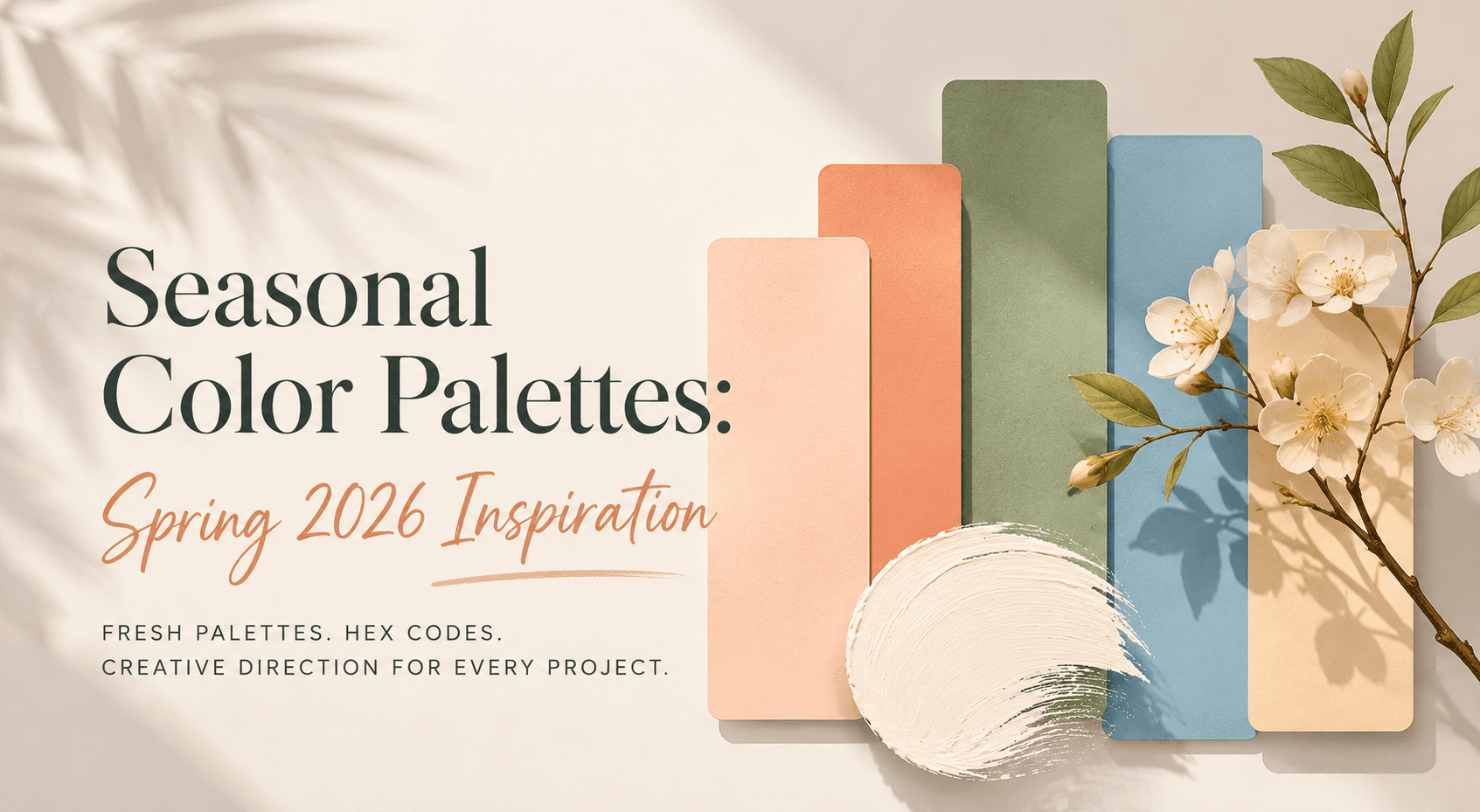
There is a particular quality to spring light that no other season quite replicates. It is soft but clear, warm but not heavy — the kind of light that makes colors look like they are lit from within rather than lit from above. Every spring, designers respond to that shift, and the palettes that feel most resonant this season reflect something the broader culture is quietly reaching for: freshness without brightness, warmth without heaviness, color with enough confidence to be felt without being stated.
The spring 2026 color palettes on this list are not trend reports packaged as design advice. They are genuinely useful starting points — with hex codes, emotional context, and a clear sense of where each palette wants to go.
What Spring 2026 Looks Like Colorwise
Before the palettes, a brief orientation. The spring color trends 2026 are shaped by two competing but compatible impulses.
The first is a continued move toward warmth. The cool, gray-dominant neutrals that characterized much of the previous decade are giving way to warmer foundations — creams, pale sands, blush whites, and the kind of linen tones that feel more like material than color. Spring 2026 is leaning into this warmth rather than away from it.
Together, these impulses produce seasonal design palettes that feel both contemporary and grounded — rooted in the natural world of the season while reflecting the current cultural mood.
1. Blossom and Stone
Palette: Pale cherry blossom, warm stone, soft rose, dusty sage, deep graphite
Hex codes: #F7E4E4 / #D8CEC4 / #D4919A / #9AAA94 / #3A3A3C
This palette opens the list because it captures the essential spring contradiction: something delicate and something solid, existing in the same frame. The pale cherry blossom and soft rose carry the season's tenderness. The warm stone and deep graphite keep the whole thing grounded and usable.
It is a palette with a genuine range. The rose works as a primary brand color at the scale of a button or typographic accent. The sage works as a secondary structural color. The stone and blossom tones handle backgrounds and surfaces. Nothing here is merely decorative — each color has a role.
2. Meadow Morning
Palette: Fresh mint, pale lemon, warm cream, soft sky, light sage
Hex codes: #C8E8D8 / #F0EAB0 / #FDF6E8 / #C4D8E8 / #A8C4A8
Meadow morning is unambiguously joyful — a palette built from the colors of a spring field in early light. Mint, lemon, sky, and sage in soft, closely related tones that feel natural together because they are natural together. This is the palette of new growth and open air.
What stops it from feeling childlike is the warm cream that anchors the set. Without it, the mint-lemon-sky combination can tip into primary-color territory. The cream introduces warmth and grounds the palette in a slightly more grown-up register.
For building out variations of this kind of fresh, multi-tone spring palette, the color palette library on Coloraccy has a wide range of similarly structured options to explore and compare.
3. Dusty Provençal
Palette: Lavender mist, pale sage, warm parchment, muted mauve, dusty olive
Hex codes: #D8D0E8 / #C0CEB8 / #F2EAD8 / #B8A0B0 / #9A9A6A
Southern France in late April. Lavender fields not yet in full bloom, the light still soft and a little hazy, the stone farmhouses the color of aged cream. Dusty Provençal is a seasonal design palette with strong art direction credentials — it photographs beautifully, it works across typography and surface design, and it carries a specific sense of place that makes brands feel like they belong somewhere rather than nowhere.
The dusty olive is the quiet hero of this palette. It adds a slightly unexpected note — a warmth that is neither green nor yellow but sits between them — that stops the lavender and sage combination from feeling expected. Against the parchment background, the full palette reads as genuinely elegant.
4. Warm Peach Bloom
Palette: Soft peach, warm apricot, pale cream, dusty rose, warm taupe
Hex codes: #F4C8B0 / #E8A888 / #FDF0E8 / #D4A0A0 / #B8A090
Peach is the spring 2026 color story that keeps appearing across trend forecasts, and this palette shows why. It is warm without being overpowering, feminine without being exclusively so, and contemporary without being cold. The range from pale cream through soft peach to warm apricot gives the palette a gentle depth that single-tone peach palettes lack.
The dusty rose and warm taupe stop this from being a one-note palette. They add structure and ensure the lighter tones have something to sit against. This palette moves between background, midtone, and accent roles with ease.
5. Green Study
Palette: Pale celadon, warm fern, deep forest, soft cream, aged gold
Hex codes: #D8E8E0 / #8AB898 / #3A6048 / #FAF4E8 / #C8A860
If there is a single color that defines spring 2026, it is green — but a more varied, tonal, and considered green than recent years. Green Study explores that depth by moving through the full value range of a single hue, from the barely-there celadon at the pale end to the deep, saturated forest at the dark end.
This palette excels in interior-adjacent design: home and garden brands, botanical illustration, sustainable product packaging, and any project where a deep connection to the natural world is part of the brand narrative.
6. Soft Iris
Palette: Pale lilac, warm white, soft periwinkle, dusty violet, light mauve
Hex codes: #E8DFF0 / #FAF8FC / #A8B4D8 / #8878A8 / #C8B8C8
Iris season in a palette. The soft periwinkle is the color the design world has been circling for two years — a blue that has enough warmth to avoid coldness and enough distinctiveness to stand apart from the standard tech blues. In this palette, surrounded by lilac, violet, and mauve, it sits in its natural context.
Strong applications include: editorial and literary design, artistic brand identities, beauty and fragrance packaging, and digital platforms targeting audiences who appreciate visual nuance.
7. Sun-Bleached Linen
Palette: Warm white, pale sand, bleached straw, light tan, natural brown
Hex codes: #FAF6F0 / #EDE4D4 / #D8CC9A / #C4AC80 / #8A6A48
This is the spring palette for people who find loud color exhausting. Sun-bleached linen lives in the warm neutral register — a range of tones that look like natural fabrics left in gentle sunlight. Nothing here is strong or assertive. Everything feels like it belongs somewhere calm and unhurried.
Despite its quietness, this palette has real utility. The tonal range from warm white to natural brown provides enough contrast for functional layouts. The bleached straw tone is the personality of the palette — a color that is neither beige nor yellow but carries qualities of both, and reads as distinctly warm and natural.
8. Garden Party
Palette: Soft coral, mint, pale lemon, warm ivory, dusty teal
Hex codes: #F0AEA0 / #A8D8C8 / #F0E8A0 / #FBF6EC / #6AABA0
Garden party is the most expressive palette on this list — five distinct colors rather than a tonal scale, each bringing a different quality to the combination. The coral is warm and social. The mint is fresh and light. The lemon is sunny and open. The dusty teal anchors the whole thing with a deeper, slightly more serious note.
This palette suits spring event design, celebratory brand campaigns, children's product design, food and beverage packaging, and social media aesthetics built around energy and optimism. It is one of those palettes that works best when you commit to it fully — a half-hearted application loses the magic.
How to Use These Palettes Seasonally
Seasonal palettes are by definition time-sensitive, which means thinking about how and where you use them.
For brand campaigns and seasonal marketing, a spring palette should feel like an evolution of your existing brand direction — not a departure from it. Introduce the seasonal tones as accent colors within your established brand system rather than replacing your primary palette wholesale.
For social media and content design, seasonal palettes thrive. The appetite for fresh, visually coherent feeds and boards is strong, and a consistent spring palette applied across posts, stories, and covers creates a striking visual identity for the season.
For product packaging and print, the warm tones dominant in spring 2026 translate well from screen to print — though it is always worth verifying that your screen colors match your print output before going to production.
For UI and digital products, seasonal refresh is more constrained — you are unlikely to retheme an entire product for spring — but seasonal landing pages, campaign microsites, and marketing materials are natural applications for these palettes.
Conclusion
Spring 2026 is asking designers to be warm, considered, and genuinely present with color — not neutral by default, not loud by trend, but thoughtful and intentional. Each of the eight palettes above carries a different expression of that quality, from the delicate restraint of sun-bleached linen to the confident openness of garden party.
Coloraccy is built for exactly this kind of color work. Explore the fullpalette showcase, generate custom shades, extract palettes from your own spring photography, and find the color direction that is right for your project — all atcoloraccy.com.