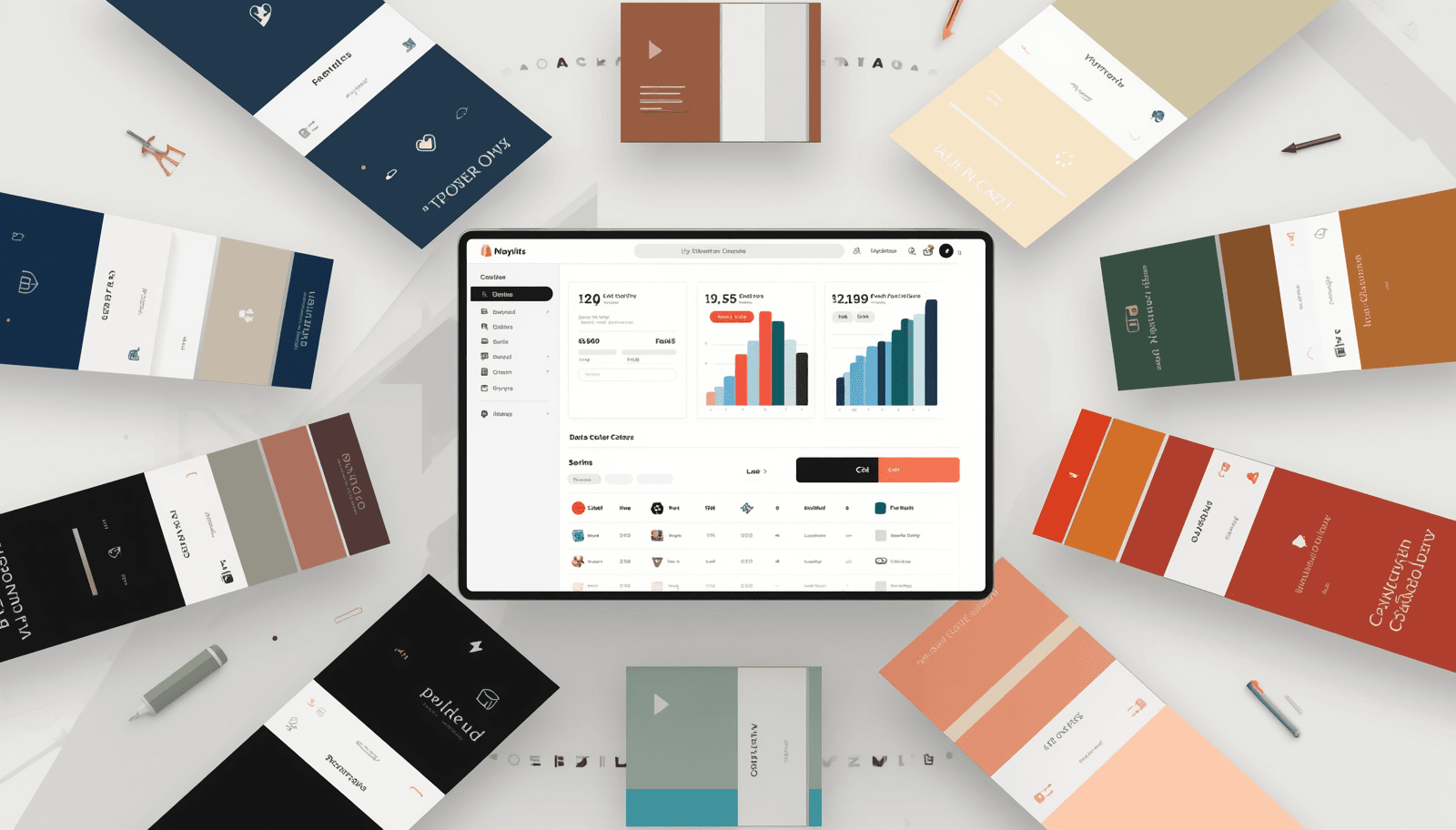
Color is the first thing shoppers notice — and the last thing most store owners optimize. Studies show that up to 90% of snap-purchase judgments are based on color alone, yet most Shopify merchants still choose colors based on personal preference rather than conversion data. If your store is not selling as well as it should, your Shopify color palettes might be the hidden culprit.
This guide breaks down eight proven ecommerce color schemes, explains the psychology behind each one, and shows you how to apply them to your online store with confidence.
Why Color Palettes Are a Conversion Asset, Not Just a Design Choice
A color palette is a curated set of colors that work together to define your brand's visual identity. In ecommerce, the right palette does more than look good — it reduces bounce rates, increases add-to-cart actions, and builds immediate brand trust.
Research from the Nielsen Norman Group confirms that users form visual impressions of a website within 50 milliseconds. That means your color palette is doing conversion work before a single word is read.
When you align your Shopify store's color scheme with your target audience's expectations and your product category's visual norms, you create an environment where buying feels natural. When those colors clash or confuse, shoppers leave without knowing why.
For a deeper foundation before diving into specific schemes, Coloraccy's guide to color theory basics is an excellent starting point.
What Makes an E-commerce Color Scheme "Convert"?
Not all color combinations are equal. A converting e-commerce color scheme typically has:
A dominant color (60%) that sets the brand tone
A secondary color (30%) that supports navigation and layout
An accent color (10%) used exclusively on CTAs and conversion elements
This 60-30-10 rule, widely used in interior design and now adopted in UI design, ensures visual hierarchy that naturally guides the eye toward purchase decisions. You can experiment with these proportions using the shade and tint generator from Coloraccy to fine-tune your dominant hues.
Element | Role | Color Proportion |
Background / Layout | Sets atmosphere | 60% dominant |
Navigation / Sections | Supports structure | 30% secondary |
CTA Buttons / Badges | Drives action | 10% accent |
8 Shopify Color Palettes That Drive Sales
1. Trust White + Midnight Navy
Best for: Electronics, finance tools, SaaS products, professional services
This is the most universally converting palette in e-commerce. White communicates cleanliness and transparency. Navy signals authority, reliability, and depth. Together, they position a brand as credible before any product copy does the work.
Brands like Apple and PayPal have leaned on variations of this scheme for decades. The contrast is high, accessibility compliance is easy to achieve, and trust transfer happens almost automatically.
Pair this with a gold or electric blue accent for CTAs, and you have a scheme that works across demographics. Explore the aesthetic palette collection for refined variations of this combination.
2. Earthy Terracotta + Warm Cream
Best for: Sustainable goods, handmade products, skincare, wellness, artisan food
The earthy e-commerce color scheme has exploded in popularity, and for good reason. Consumers increasingly associate warm, natural tones with authenticity and eco-consciousness. Terracotta with cream backgrounds creates a sensory warmth that reduces purchase anxiety for premium-priced artisan products.
This palette performs especially well with brands targeting millennial and Gen Z buyers who prioritize values-led shopping. For a broader exploration, the African palette on Coloraccy captures deeply resonant earthy tones drawn from natural pigments and cultural color traditions.
Use the image color extractor to pull exact terracotta tones from your product photography for a cohesive look.
3. Clean Sage Green + Off-White
Best for: Natural beauty, organic food, yoga and wellness, eco apparel
Sage green signals calm, health, and environmental responsibility without the harshness of a saturated green. When paired with off-white rather than stark white, it creates a soft visual environment that invites browsing over quick scanning.
This scheme is particularly effective for brands where the shopping journey itself is part of the value proposition — where customers want to linger. The pastel color combinations guide on Coloraccy provides practical pairing advice for working with muted greens and their complementary tones.
4. Bold Black + Electric Accent
Best for: Luxury fashion, streetwear, gaming peripherals, premium tech accessories
Black is not just a color — it is a positioning statement. A black-dominant Shopify store immediately signals premium, exclusive, and high-value. The key is pairing black with a single vivid accent color: electric yellow, neon green, or deep crimson.
This accent carries all CTA buttons, sale tags, and hover states. The contrast is extreme and intentional. Shoppers trained on luxury retail expect this tension between darkness and highlight.
For brands building out this look, the monochrome color palettes for minimalist UI resource from Coloraccy is directly relevant.
5. Soft Blush + Rose Gold
Best for: Jewelry, bridal, cosmetics, gifting, women's lifestyle
Blush and rose gold together create an aspirational femininity that converts exceptionally well in gifting categories. The softness of blush reduces visual friction, while rose gold accents communicate premium value without the coldness of silver or the weight of dark gold.
This palette's strength is emotional resonance. Purchases in gifting and beauty categories are highly emotionally driven, and these colors prime the right feelings at first glance.
Use Coloraccy's complementary color finder to identify which deeper tones balance a blush-dominant palette without overpowering it. You can also browse the acrylic palette for inspiration on layered pastel combinations.
6. Deep Forest Green + Brass
Best for: Outdoor gear, hunting and fishing, premium spirits, heritage brands
This palette draws on decades of heritage branding. Forest green evokes the outdoors, durability, and time-tested quality. Brass adds warmth, craftsmanship, and a sense of value that chrome or silver cannot replicate.
Together, they work for brands that want to signal they have been around — whether or not they have. The combination also performs exceptionally well in print-adjacent contexts where packaging and online store design need to feel cohesive.
Explore the elegant minimalist colors guide to see how restraint in palette application amplifies the impact of deep, rich tones like forest green.
7. Bright Coral + Crisp White
Best for: Summer apparel, fitness gear, travel accessories, food, and beverages
Coral is one of the most attention-commanding warm colors without the aggression of red. On a white background, it feels energetic, playful, and modern. This combination works particularly well for brands targeting active lifestyles where energy and motion are core to the identity.
The coral-white contrast also performs well for flash sale overlays and urgency-driven promotions. For a full picture of how warm tones like coral function in a digital space, the adaptive color system for UI palettes article on Coloraccy provides technical insight.
8. Monochrome Gray + Single Brand Color
Best for: General retail, multi-category stores, marketplace-style shops
This is the safest and most scalable Shopify color palette strategy. A neutral gray foundation — ranging from near-white to medium charcoal — supports any product photography without introducing color bias. A single brand color, injected into navigation elements, buttons, and headers, maintains identity without visual chaos.
This approach scales across large product catalogs because it never fights with product images. It is the preferred model for stores that sell across categories. The abstract palette section at Coloraccy demonstrates how a neutral base can carry bold accent color stories.
To build this type of palette systematically, the brand color kit tool at Coloraccy is purpose-built for exactly this workflow.
How to Choose the Right Palette for Your Shopify Store
Selecting from these e-commerce color schemes is not simply about what looks good. It requires aligning four factors:
Product category expectations — Shoppers have pre-conditioned color associations by category. Fighting these creates friction.
Target audience psychology — Age, gender, and cultural background all influence color perception.
Competitor differentiation — If your niche defaults to blue, standing out with deep green can capture attention.
Platform and device rendering — Colors appear differently on OLED mobile screens versus desktop monitors.
Use the color picker tool to preview exact hex values before finalizing your palette, and the color format converter to ensure your chosen colors are properly formatted for Shopify's theme editor.
For visual inspiration before locking in a direction, the palette showcase at Coloraccy presents curated combinations across categories and moods.
Common Mistakes That Kill E-commerce Conversions
Even with strong palette intentions, these errors frequently undermine online store design performance:
Using too many colors. Every color added beyond the core three dilutes visual hierarchy. Shoppers stop knowing where to look.
Ignoring CTA contrast. A buy button that blends into the background — even subtly — measurably reduces clicks. Your accent color exists only for conversion elements.
Choosing colors for the desktop only. Over 70% of e-commerce traffic is now mobile. Colors that look refined on a widescreen often feel muddy or flat on a phone screen.
Following trends without testing. Sage green is popular, but if your audience expects the clinical white of medical supply stores, adopting sage will signal the wrong brand.
Skipping accessibility standards. WCAG 2.1 contrast requirements are not optional considerations — they affect both user experience and SEO indexing signals.
For a structured process that avoids these pitfalls, " How to work with color palettes on Coloraccy walks through the full professional workflow.
Practical Tools for Building Your Shopify Palette
The difference between a palette that looks good in theory and one that performs in production often comes down to the tooling used to build it. Coloraccy provides a complete toolkit for e-commerce color work:
Random color generator — for exploratory ideation when starting from scratch
Shade and tint generator — for building depth and hover states from a single base color
Complementary color finder — for identifying accent colors with natural visual tension
Image color extractor — for deriving your palette directly from your hero product photo
Brand color kit — for consolidating your final palette into a reusable system
These tools bring a professional color strategy workflow into a single platform. For those newer to the process, the pastel color palette generator guide offers a practical walkthrough of how to move from raw color ideas to a deployable scheme.
Conclusion
Color is a conversion lever that most Shopify merchants leave unpulled. The eight ecommerce color schemes covered here — from Trust White and Navy to Monochrome Gray with a single brand accent — each carry proven psychological triggers that guide shoppers from discovery to purchase.
The difference between a store that looks fine and one that converts consistently is rarely the product. It is almost always the visual environment that surrounds that product. A deliberate, research-backed Shopify color palette removes friction, builds trust, and signals the right things before a single word is read.
Coloraccy gives you every tool you need to build, test, and refine your color strategy — from the full color palette library to the palette showcase and the complete swatch toolkit.
Start building a palette that works as hard as your products do. Visit Coloraccy and turn your store's color strategy into a genuine competitive advantage.